Some people think that recycling is a waste of time - they are talking rubbish!
Recycling is the process of transforming old materials like -
Plastic
Glass
Paper
Metal
into brand new products.
This process has a number of benefits -
Recycling saves energy and reduces pollution.
By turning old materials into new things, we can reduce the use of fossil fuels and lower our emissions.
Recycling reduces the need to extract and process raw materials from the planet. Extraction processes, such as mining, require a lot of energy and create pollution which reduces the quality of our air and water.
Recycling reduces landfill levels and tackles climate change.
Recycling reduces the amount of waste going to landfill. The faster we move away from landfill sites, the better.
As organic (food) waste breaks down in landfill, it emits significant amounts of methane, a very strong greenhouse gas which contributes greatly to global warming.
Recycling protects the environment.
Waste that ends up in landfill takes a very long time to decompose.
For example, plastic bottles take around 450 years to decompose. Overtime, these materials can release harmful chemicals which pose a threat to natural habitats and wildlife.
Processes - what happens to your recycling
Collected
Your waste is collected from the kerbside (or equivalent if you live in different types of housing, e.g. high-rise flats).
Sorted
After collection, your waste is taken to a Materials Recovery Facility (MRF) to be sorted. The sorting process is done by hand and with machines.
- firstly, any non-recyclable items are removed
- paper and cardboard are separated out by using a vibrating machine
- steel and aluminium cans are separated using magnets
- different types of plastic are identified by colour and separated by optical scanners
- after these materials have been removed, glass should be the only material left. The glass is then sorted by colour and crushed into smaller pieces
The main challenge when sorting and processing recycling is contamination. This is when the wrong items are put in recycling bins. The removal of these items is done by hand which slows down the sorting process. If contaminated items are not removed, they can damage equipment and halt sorting all together.
Processed
Once your recycling has been sorted into different categories it is processed. This can involve -
- crushing
- shredding
- washing
- melting
- pelleting
The fully processed materials are then sent to manufacturers who can use them to create new products.
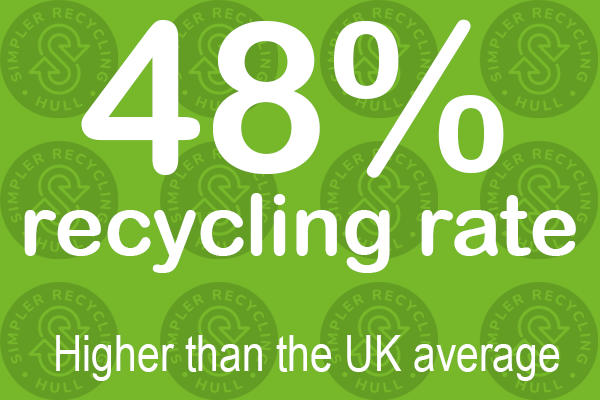
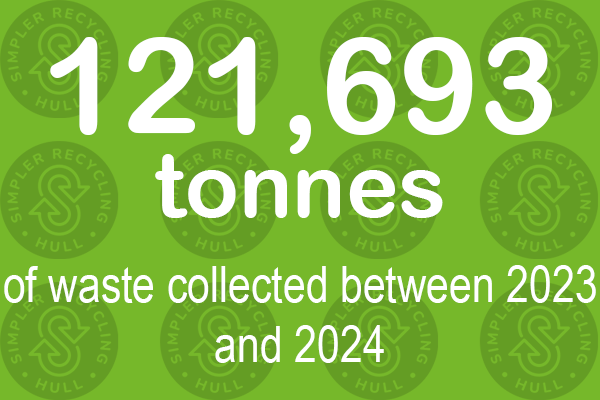
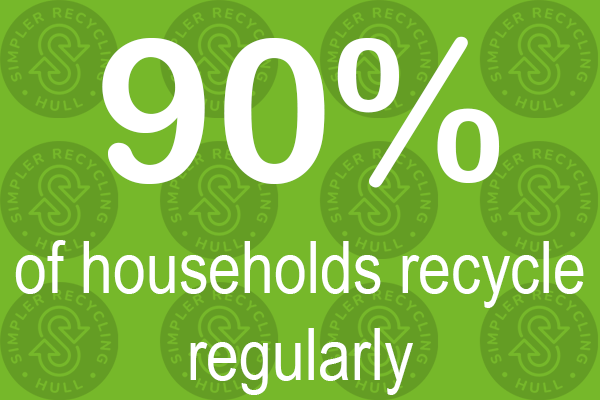
Stats
In Hull


In the UK